30 Questions to Ask Parents at Conferences

The best questions to ask parents at conferences are open and specific to the child in front of you. Families know things about their children that you can't see in a classroom, and a good question invites them to share it. Below are 30 you can use for any grade, grouped by what you hope to learn.
You won't use them all. Pick a handful, and let the conversation lead the rest.
Picking Questions to Ask Parents at Conferences
Choose three to five for each family. A 15- or 20-minute conference has room for a real conversation, not a quiz. Pick the ones that fit that child and that family, and skip the rest.
Send one or two ahead of time. A family that has thought about a question for a few days gives a fuller answer than one hearing it cold. It also helps parents who are nervous about what a conference will feel like.
Start with something easy and positive. Then move toward the harder topics once everyone has relaxed. Keep your notes to a few words so you can look up and stay with the person talking.
Fit the Questions to the Grade
With young children, families can often tell you a lot about routines, friendships and what their child talks about at dinner. Questions 1 to 5 and 17 to 21 fit well here. With parents of early readers, question 25 can become one reading habit to try at home.
In middle and high school, the student may know best. If the student joins the conference, turn a question toward them: "What are you proud of right now?" Ask parents about the larger picture, such as how their teen manages time and who they turn to when something goes wrong.
Some families will have little to say, and that is fine. A short answer doesn't mean a parent doesn't care. It may mean the question was too big, so try a smaller one: "What did you notice this week?"
Getting to Know the Child
These open the conversation and show families you see more than grades.
How would you describe your child to someone who has never met them?
What does your child say about school when they get home?
What is your child most excited to tell you about?
What helps your child feel comfortable in a new situation?
Is there anything about your child's day-to-day life that would help me teach them better?
What name or nickname does your child like to be called?
Learning at Home
Homework and routines look different in every house. Ask without judging, and take the answer as information.
What does homework time look like at your house?
Where does your child like to read or work?
What does your child choose to do when nobody tells them what to do?
Which subject do you hear about most at home, and which one do you hear about least?
What has helped your child through a hard assignment in the past?
Strengths and Interests
Ask about strengths even when the conference has hard news. Starting here tells the family you notice what goes right.
What is your child proud of right now?
What do they love to do outside of school?
What are they naturally good at that I might not see in class?
Which books, games, shows or topics hold their attention?
When have you seen your child help someone else?
Social and Emotional Questions
Keep these gentle. You are asking what families notice, not asking them to explain or defend anything.
How does your child tend to handle a frustrating moment?
Who do they talk about as friends?
What helps your child when they feel worried or upset?
How does your child seem when they come home after school?
Has anything changed at home or in your child's routine that you would like me to know about?
Goals and Next Steps
This is where you and the family agree on what happens next. Aim to leave with one or two shared goals, not a long list.
What are you hoping your child will get from this school year?
What would you like to see your child do more of?
What worries you most right now, if anything?
What is one thing we could try together over the next month?
How will we know that it is working?
Communication
Finish by agreeing on how you will stay in touch after the meeting.
What is the best way for me to reach you: email, phone or a message through the school app?
What time of day works best for a short call or note?
Is there a language you would like me to use, or help you would like the school to arrange?
What else should I have asked you today?
Questions to Leave Out
Some questions put a parent on the defensive, even when you mean well. Watch for these:
Questions that start with "Why doesn't he" or "Why won't she". Ask what the family sees instead.
Questions about money, immigration status or private family matters. If something at home affects school, let the family bring it up.
Comparisons with siblings or classmates. Talk about this child's own progress.
Yes or no questions on big topics, such as "Is everything okay at home?" Question 21 asks the same thing and leaves room to answer.
If a family needs an interpreter, ask the school to arrange one before the meeting, and speak to the parent, not the interpreter. Plan for a longer slot, since every answer is said twice.
Ask Parents a Question Before the Conference
You don't have to save every question for the meeting. When a parent books a conference on the SignUpSnap booking page, there is an optional Notes box below Parent Name, Email and the child name field. Put one question in the message you send with the booking link, such as "What is your child proud of right now?", and ask families to answer it in Notes when they book.
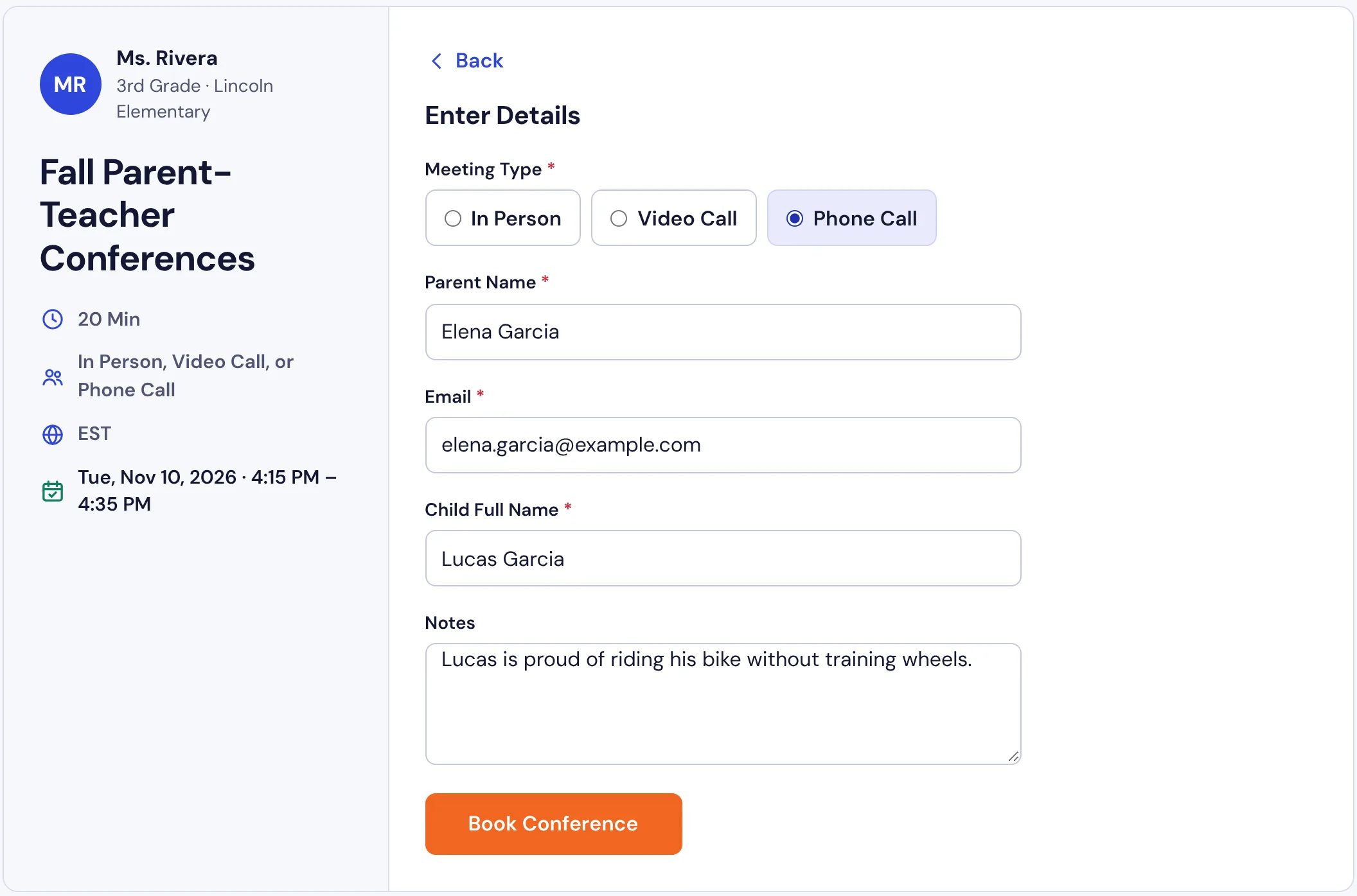
Families who skip the box can still book, so nobody is blocked. You can read the answers in the Notes column of the All Bookings table on the conference page, or select a booking to see its note in the details. To get them on paper, select ⋯, then Print Day Sheet. The sheet has a Notes column.
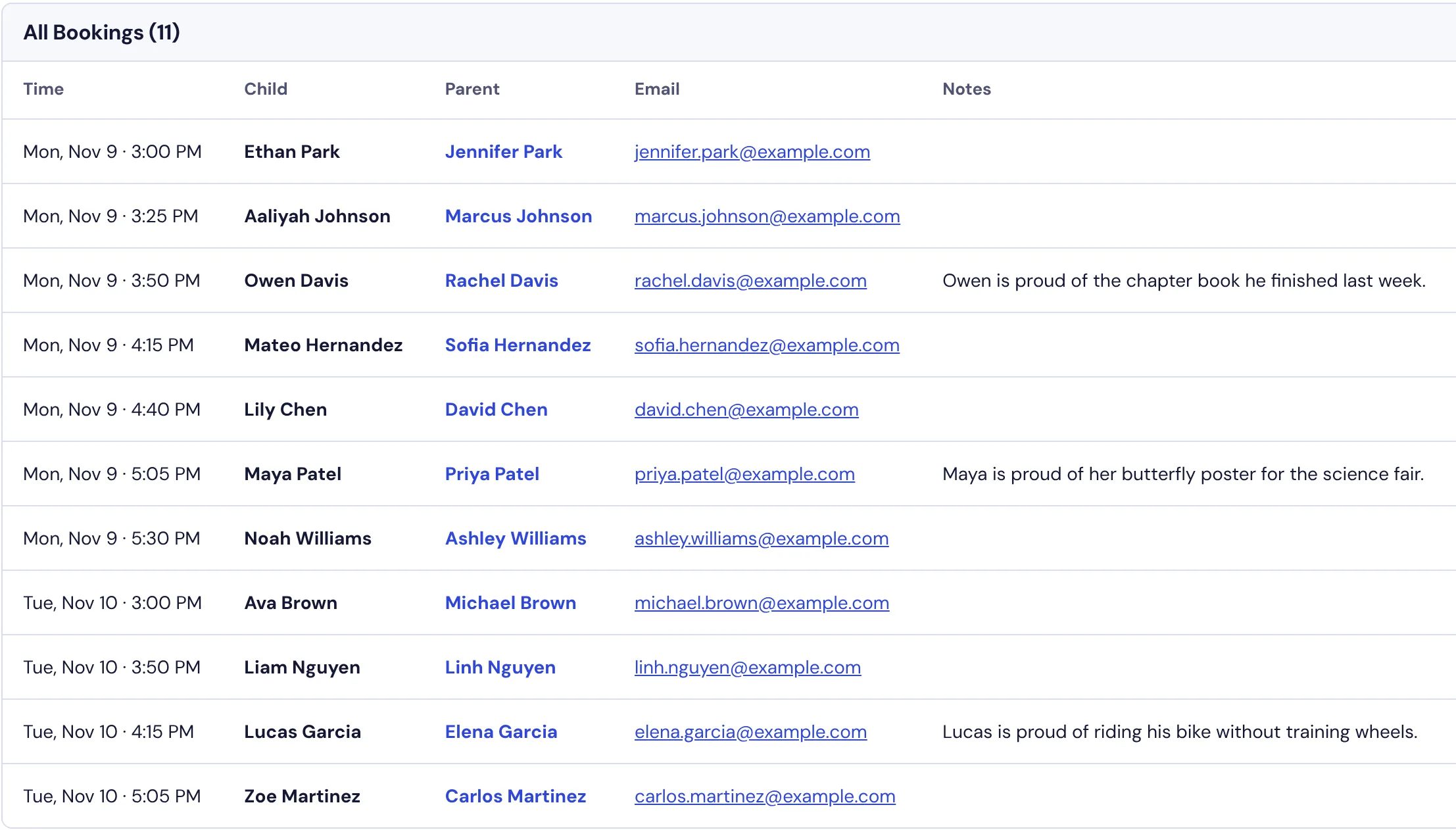
Read the notes the night before. You walk in already knowing something about each child, and the family has already started the conversation. For more on the tool itself, see the Parent-Teacher Conferences page.
How to Listen
Ask, then wait. A few seconds of quiet feels long to you and gives a parent room to think. Don't fill the pause with a second question.
Repeat back what you heard in a few words: "So mornings are the hard part."
Take what families say as true for their home, even when it differs from what you see in class.
Skip advice until you have asked a follow-up, such as "Tell me more about that."
Thank them for sharing something personal.
If a parent shares something heavy, you don't need to fix it in the meeting. Listen, say you are glad they told you, and follow up with the right person at your school.
How to Close the Conference
End on the shared goal. Say it out loud in one sentence, then say what you will do and what the family might try. Keep it small enough to remember.
Name one strength you saw in the child today.
Repeat the goal you agreed on.
Say when you will check in next, and how.
Thank the family for coming.
A short note the next day with the goal and your next check-in date keeps the plan from fading. If you are still setting up your schedule, How to Schedule Parent-Teacher Conferences Without the Email Chaos walks through days, slot lengths and breaks. When you are ready to build it, Set Up Parent-Teacher Conferences in 5 Minutes shows the steps.